


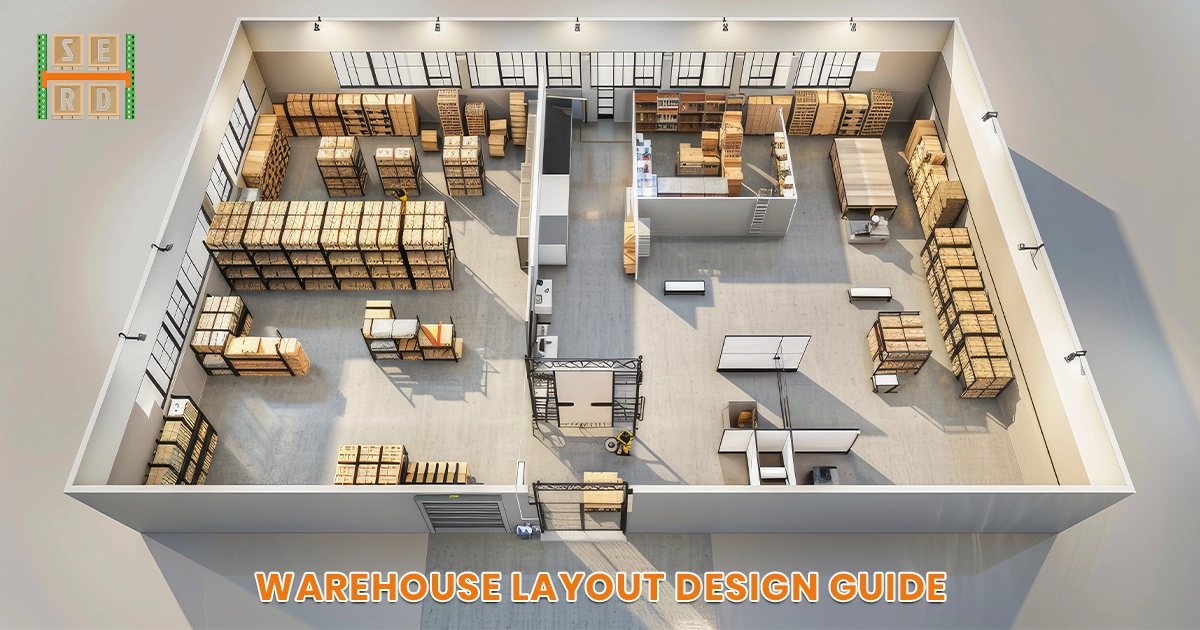
Warehouse Layout Design Guide for Better Storage and Workflow
Optimize Your Warehouse with Southeast Rack Depot Design Consultation
Warehouse layout design is the way a warehouse space is organized so that goods can move smoothly from receiving to storage, picking, packing, and dispatch without wasting time or effort. It is less about how much space you have and more about how intelligently that space is structured for daily operations.
A warehouse does not become inefficient overnight. In many facilities, operational problems develop gradually through poor movement planning, inconsistent storage flow, and layouts that were never designed for long-term growth.
Businesses often experience delayed dispatch, excessive forklift movement, blocked staging areas, and underutilized storage capacity even when enough warehouse space is available. In most cases, the problem is not the building size itself, but how movement flows between receiving, storage, picking, and shipping operations.
This is why warehouse layout design plays such a critical role in warehouse performance. A properly structured layout improves storage organization, movement efficiency, inventory accessibility, and workflow speed without necessarily increasing warehouse size.
In this guide, you will learn how professional warehouse layouts are planned, what causes operational bottlenecks inside storage facilities, and how better zoning, rack placement, and workflow planning improve long-term warehouse efficiency.
What Makes a Warehouse Layout Efficient?
An efficient warehouse is designed around movement flow first and storage second.
Many facilities focus only on fitting more racks into available space, but storage density alone does not improve operations. If workers and forklifts spend unnecessary time moving between picking zones, storage aisles, and dispatch stations, productivity slows down regardless of storage capacity.
Most warehouse operations follow a structured movement sequence:
Inbound → Receiving → Storage → Picking → Packing → Dispatch
When this movement path becomes interrupted by poor zoning, inefficient aisle planning, or disorganized storage systems, operational delays begin appearing throughout the facility.
Why Warehouse Flow Matters
Warehouse flow directly affects labor efficiency, order accuracy, and operational speed.
In poorly planned facilities, receiving and dispatch operations often overlap, staging areas become congested, and fast-moving inventory is stored too far from outbound zones. Over time, these issues create unnecessary movement across nearly every warehouse process.
This is why many businesses begin with warehouse consultation services before redesigning storage systems or operational layouts.
Functional Zoning Improves Workflow
Well-organized warehouses separate operations into dedicated zones based on workflow requirements.
Most efficient facilities include clearly defined areas for receiving, staging, bulk storage, picking, packing, shipping, and returns handling. This separation improves operational control while reducing congestion during busy periods.
Without proper zoning, warehouse operations begin competing for the same space, leading to delays, blocked aisles, and slower picking performance.
How to Design an Efficient Warehouse Layout
1. Analyze Inventory Movement Patterns
Before installing racks or redesigning storage zones, businesses must understand how inventory moves throughout the warehouse.
Fast-moving products should remain closer to dispatch areas, while slower inventory can be stored in less active sections. This reduces unnecessary picker travel distance and improves operational speed across daily workflows.
Warehouses that ignore movement frequency often create avoidable congestion and labor inefficiencies over time.
2. Optimize Rack Placement
An effective pallet racking layout should balance storage density with accessibility.
While high-density systems increase storage capacity, they should still allow safe forklift movement and efficient product access. Selective pallet racks are commonly used for flexible access, while drive-in systems are better suited for bulk storage operations.
The objective is not simply to maximize rack count, but to improve movement efficiency throughout the facility.
3. Improve Vertical Space Utilization
One of the most overlooked warehouse planning opportunities is vertical storage capacity.
Many warehouses run out of floor space while large amounts of vertical space remain unused. Modern warehouse storage systems use taller racks, mezzanine structures, and multi-level storage layouts to increase capacity without expanding the building footprint.
This approach improves storage efficiency while helping businesses control expansion costs.
4. Reduce Traffic Congestion
Warehouse aisles are operational movement corridors, not empty spaces between racks.
Poor aisle planning increases forklift bottlenecks, slows picking operations, and creates safety concerns during peak activity. Efficient aisle structures are designed around equipment movement, traffic frequency, and operational flow.
This becomes especially important during warehouse installation and relocation services, where outdated layouts are restructured to support better workflow performance.
Common Warehouse Layout Problems
Many warehouse inefficiencies are caused by planning decisions that initially appear minor but gradually create operational problems.
Some of the most common issues include storing fast-moving inventory too far from dispatch zones, mixing picking and storage operations together, underutilizing vertical storage space, and maintaining inconsistent aisle widths throughout the facility.
These problems increase unnecessary movement and reduce workflow efficiency across daily operations.
Signs Your Warehouse Layout Needs Improvement
Operational bottlenecks usually appear before a warehouse completely runs out of storage space.
Common warning signs include:
- Delayed outbound shipments
- Frequent congestion in picking zones
- Excessive forklift traffic
- Difficulty locating inventory
- Slow order fulfillment during peak periods
- Reduced storage efficiency despite available space
These are often indicators that warehouse flow is no longer aligned with operational demand.
Frequently Asked Questions
How often should a warehouse layout be reviewed?
Warehouse layouts should typically be reviewed every few years or whenever inventory volume, operational processes, or storage requirements change significantly. Regular evaluations help identify inefficiencies before they begin affecting workflow and operational performance.
What is the best warehouse layout for operational efficiency?
The best warehouse layout depends on inventory movement, order volume, and available space. U-flow and I-flow layouts are commonly used because they improve operational movement and reduce unnecessary travel distance.
How does pallet racking improve warehouse efficiency?
A properly planned pallet racking layout improves storage organization, accessibility, and vertical space utilization. It also supports smoother forklift movement and faster picking operations throughout the warehouse.
Why is warehouse zoning important?
Warehouse zoning separates receiving, storage, picking, packing, and dispatch operations into dedicated areas. This improves workflow control, reduces congestion, and creates more organized warehouse movement.
A successful warehouse layout is not simply about fitting more inventory into a building. The real objective is to improve operational flow, reduce unnecessary movement, and create a structure that supports long-term efficiency.
A properly planned warehouse layout design improves storage organization, workflow speed, inventory accessibility, and operational control across the entire facility.
If your warehouse is experiencing congestion, inefficient storage flow, or operational delays, professional warehouse consultation services can help identify layout inefficiencies before they begin affecting productivity and operational costs.
You can also explore related services:
- Warehouse Consultation
- Warehouse Designing Consultation
- Warehouse Installation & Relocation Services
- Rack Shipping Services
If your warehouse operations are slowing down due to inefficient storage flow, limited space utilization, or ongoing congestion, professional warehouse layout planning can help improve efficiency without expanding your facility. Southeast Rack Depot provides expert warehouse consultation, layout design, pallet racking solutions, and installation services tailored to your operational needs. Contact their team today to create a smarter, more organized warehouse built for long-term productivity and growth.