


What is Pallet Rack Wire Decking?
Walk through almost any distribution center or warehouse and you’ll spot it: rows of metal mesh panels sitting between pallet rack beams. That’s pallet rack wire decking, and while it’s easy to overlook, it plays a bigger role in warehouse safety and storage efficiency than most people realize.
If you’ve been asked to spec out decking for a new or existing rack system, this guide covers what wire decking actually is, why so many facilities use it, the different pallet rack deck types available, and how to choose the right one for your operation.
What Is Pallet Rack Wire Decking?
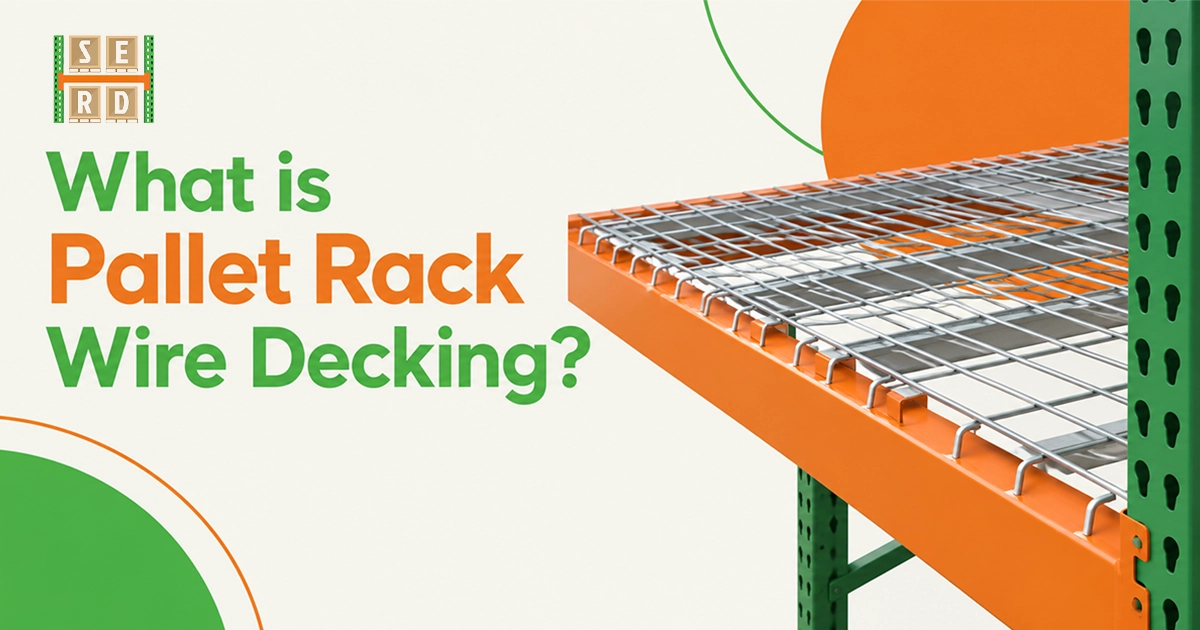
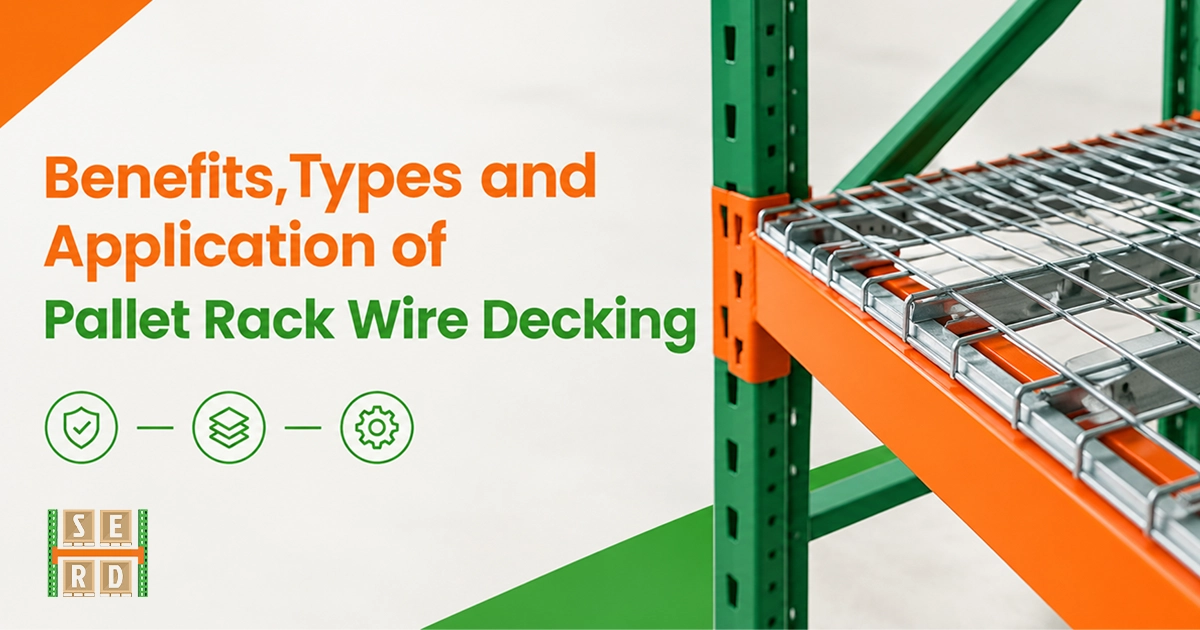
Pallet rack wire decking is a welded wire mesh panel that sits across the beams of a selective pallet rack system, creating a solid surface for pallets, cartons, or loose items to rest on. Instead of relying only on two beams to support a pallet, the mesh spreads weight evenly across the entire shelf level, which adds stability and reduces the risk of a pallet shifting or falling through.
Each panel typically has a formed channel or flare running underneath, which locks the deck onto the beam flange without bolts, clips, or welding on site. Most decks simply drop into place and stay put under load, which makes installation and reconfiguration fast, even on tall or hard to reach rack levels.
Why Warehouses Use Wire Decking
1. Fall Protection and Safety
Wire decking keeps small boxes, loose products, and damaged pallets from slipping through the gap between beams and falling onto workers or equipment below. In many facilities, this makes wire decking less of an upgrade and more of a safety requirement, especially where employees walk or work underneath loaded rack levels.
2. Fire Code and Sprinkler Compliance
Because it’s made of open wire mesh rather than solid steel or wood, pallet rack wire decking allows sprinkler water and airflow to pass through the shelf level. Many fire codes specifically require open mesh decking (rather than solid decking) in racked storage areas so that overhead sprinklers can reach a fire without a solid barrier blocking them.
3. Better Load Stability
Spreading pallet weight across the full deck surface, rather than concentrating it on two beam edges, reduces stress on individual pallets and makes it easier to store irregular loads, slip sheets, or cartons without a pallet underneath at all.
4. Faster, Tool Free Installation
Most wire decks are designed to drop directly onto the beam flange and lock into place under load, with no bolts, brackets, or welding required. That means a crew can deck out an entire row of racking in a fraction of the time solid decking would take.
5. Visibility and Inventory Management
Because the mesh is open rather than solid, workers and forklift operators can see through to the level below, which helps with quick visual inventory checks and reduces blind spots during picking and putting away.
Types of Pallet Rack Wire Decking
Not all wire decking is built the same way, and choosing the right pallet rack deck type depends on your rack configuration, load weight, and how the deck needs to sit on the beam.
Waterfall Edge Decking
The most common style, waterfall decking, has a rounded, downward curved front and back edge that hooks over the beam without any additional hardware. It’s easy to install, works with most standard beam profiles, and is the default choice for general warehouse storage.
Flared Channel Decking
Flared decking has a wider, flared opening at the channel edge, which makes it compatible with a broader range of beam widths and thicknesses. This style is a good fit when you’re mixing rack brands or beam sizes across a facility.
Structural Channel Decking
Built with heavier gauge wire and reinforced support channels, structural decking is designed for higher weight capacities and wider beam spans. It’s commonly used for bulk storage, heavier pallet loads, or applications where extra rigidity matters.
Solid Steel Decking
Not technically “wire” decking, but worth mentioning as a point of comparison. Solid decking provides a fully enclosed surface, which is useful for very small items or loose products, but it doesn’t allow the same airflow or sprinkler penetration that open mesh decking does, so it’s less common in fire code sensitive storage areas.
Choosing the Right Wire Decking for Your Racks
A few factors determine which wire decking for pallet racks makes sense for your facility:
- Beam type and width. Confirm your beam’s step or box profile and flange width so the deck channel fits securely.
- Load capacity. Match the wire gauge and support channel spacing to your heaviest expected load, not just your average load.
- Wire spacing (mesh opening). Tighter mesh spacing (commonly 2 inches by 4 inches) works well for smaller cartons and loose items, while wider spacing suits standard palletized loads.
- Fire code requirements. Check local fire and building codes, since many jurisdictions require open mesh decking with a minimum percentage of open area for sprinkler coverage.
- Number of support channels. Heavier loads or wider beam spans typically call for three or four channel decks instead of two, for added rigidity and reduced sag.
Common Applications for Pallet Rack Wire Decking
Wire decking shows up across nearly every industry that uses selective pallet racking, including:
- Distribution centers and 3PL warehouses storing mixed SKUs and loose cartons
- Manufacturing facilities staging parts, components, or work in process inventory
- Retail and grocery backrooms needing safe, code compliant overhead storage
- Cold storage facilities where ventilation and drainage matter as much as load support
- E commerce fulfillment centers picking small, loose items directly off rack levels
Anywhere pallets sit above walkways, workstations, or other inventory, wire decking adds a layer of safety that solid beams alone don’t provide.
Frequently Asked Questions
What is pallet rack wire decking?
Pallet rack wire decking is a welded wire mesh panel placed between pallet rack beams to support pallets and loose items, add fall protection, and allow sprinkler water and airflow to pass through the shelf level.
Do I need wire decking on my pallet racks?
Many fire codes require open mesh decking in racked storage areas, and most warehouses use it for safety, since it prevents small items or damaged pallets from falling through beam gaps.
What are the main types of pallet rack decking?
The most common types are waterfall edge decking, flared channel decking, and structural channel decking, along with solid steel decking for facilities that don’t need open mesh airflow.
How much weight can wire decking hold?
Capacity depends on wire gauge, mesh spacing, and the number of support channels, but properly specified wire decks commonly support anywhere from a few hundred pounds up to 2,500+ pounds per deck panel.
Does wire decking fit any pallet rack beam?
Most wire decks are sized to standard beam profiles, but it’s important to confirm your beam’s flange width and step height, since flared channel decking offers more flexibility across different beam sizes than waterfall edge decking.
Is wire decking required by fire code?
In many jurisdictions, yes. Fire codes often require open area decking in racked storage to allow sprinkler systems to function properly, though requirements vary by location and storage height, so it’s worth confirming with your local fire marshal.
Final Thoughts
Pallet rack wire decking might be one of the simplest components in a warehouse, but it plays an outsized role in safety, fire code compliance, and everyday storage efficiency. Understanding the different pallet rack deck types, how they install, and how to match them to your beams and load requirements will help you build a rack system that keeps both your inventory and your team safe.
If you’re ready to spec out decking for your facility, Southeast Rack Depot can help you find the right wire decking, beams, and accessories for your load and layout requirements.