


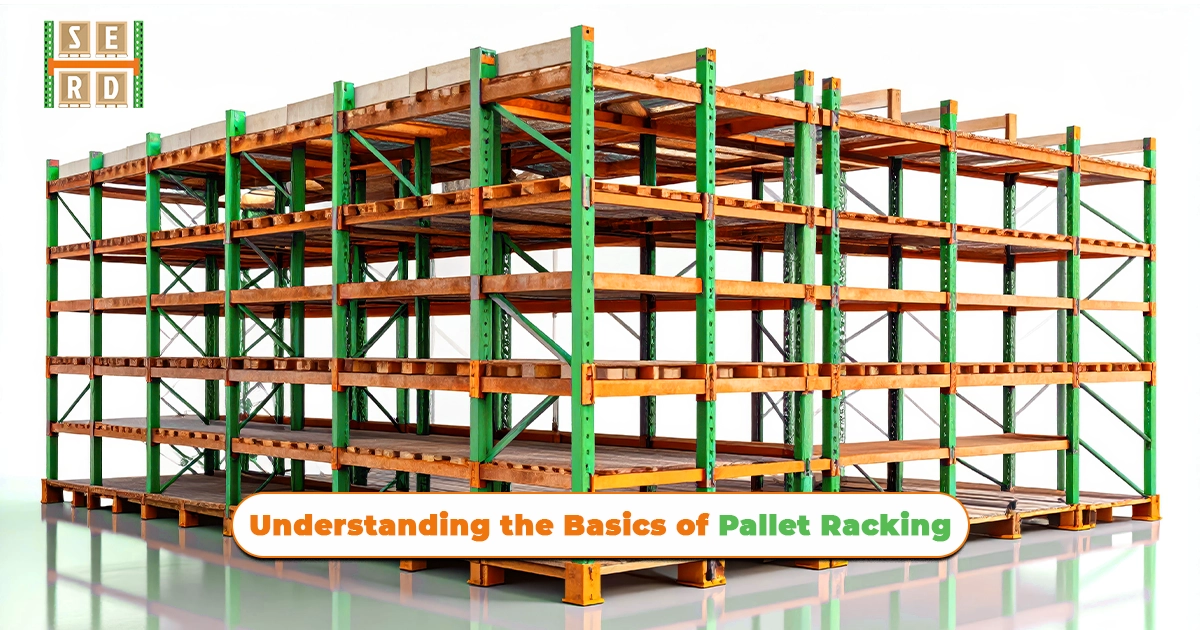
Understanding the Basics of Pallet Racking
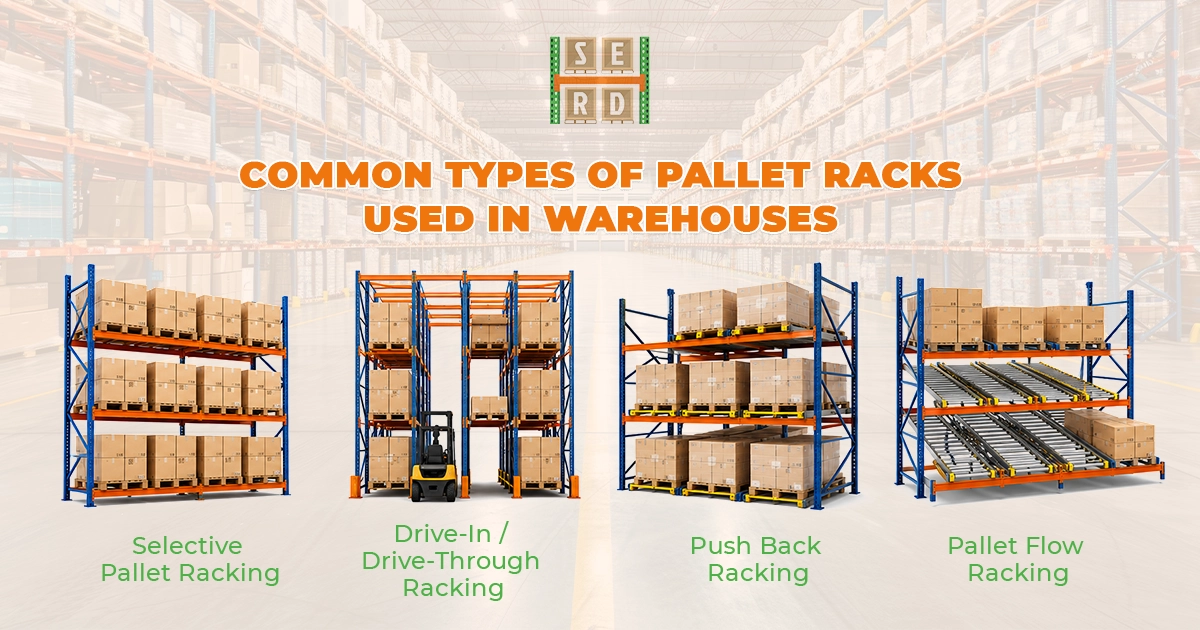
Common Types of Pallet Racks Used in Warehouses
Efficient storage is one of the core foundations of warehouse performance. As inventory volumes increase and supply chains become more demanding, businesses need systems that can organize goods efficiently while maximizing available space.
This is where pallet racking becomes essential. It allows warehouses to utilize vertical space effectively, improve accessibility, and maintain structured inventory flow across operations. From small storage facilities to large distribution centers, pallet racking remains one of the most reliable storage systems in modern logistics.
What Is Pallet Racking?
Pallet racking is a structured storage system designed to hold palletized goods on horizontal beams supported by vertical uprights. It is engineered to improve storage density while maintaining accessibility and safety within warehouse environments.
Unlike floor stacking, pallet racking introduces a controlled structure that improves organization, reduces product damage, and supports efficient material handling.
The key advantages include improved inventory visibility, better space utilization, and safer warehouse operations.
Importance of Pallet Racking in Modern Warehousing
Modern warehouses operate under pressure to store more goods in less space while maintaining fast picking and dispatch cycles. Without a structured system, this balance becomes difficult to achieve.
Well-designed Warehouse Racking Systems help improve operational flow by:
- maximizing vertical storage capacity
- improving order picking efficiency
- reducing handling errors and product damage
- creating safer and more organized work environments
- supporting scalable warehouse expansion
Selective Pallet Racking
Selective racking is the most widely used system in warehouse environments due to its simplicity and accessibility. Each pallet position is directly accessible, making it ideal for operations with a high variety of products.
This system works particularly well in environments where inventory turnover varies and flexibility is required. It allows easy stock rotation and quick retrieval without disturbing other stored goods.
For many facilities, it forms the base structure of their Pallet Racking Systems setup.
Key Features
- Direct access to every pallet
- Easy installation and modification
- High compatibility with most warehouse layouts
Best For
- High SKU variety
- Fast-moving inventory
- General warehousing operations
Selective racking is often the foundation of most Pallet Racking Systems because it provides maximum accessibility
Drive-In and Drive-Through Racking
Drive-in and drive-through systems are designed for high-density storage where maximizing space is the primary objective.
Instead of multiple access aisles, forklifts enter directly into the racking structure to place or retrieve pallets. This significantly increases storage capacity but reduces direct accessibility.
These systems are commonly used in:
- bulk storage environments
- cold storage facilities
- operations with large quantities of similar products
Push Back Racking
Push back racking offers a balance between density and accessibility. It allows multiple pallets to be stored within a single lane using a nested cart system that moves along inclined rails.
When a new pallet is added, existing pallets shift backward automatically. When inventory is removed, pallets move forward into position.
This system is particularly effective for medium-turnover inventory where space efficiency and speed both matter.
How It Works
Pallets are loaded from one side and automatically move forward on roller tracks for FIFO (First In, First Out) inventory rotation.
Best For
- Food and beverage industries
- Pharmaceutical storage
- Perishable goods
Key Advantage
Ensures strict inventory rotation and reduces product expiration risks.
Among the Various Types of Pallet Racking, this is one of the most efficient for controlled inventory flow.
Pallet Flow Racking
Pallet flow systems operate on a gravity-fed mechanism where pallets move from the loading side to the picking side on roller tracks.
This creates a structured FIFO (First In, First Out) flow, making it highly suitable for industries where inventory rotation is critical.
It is commonly used in food distribution, pharmaceuticals, and high-volume logistics operations where product freshness and rotation control are essential.
Among the Various Types of Pallet Racking, this system is one of the most efficient for controlled inventory movement.
Cantilever Racking
Not all materials fit standard pallet systems. Long, bulky, or irregularly shaped goods require a different approach.
Cantilever racking is designed specifically for such materials, including timber, pipes, steel bars, and construction supplies. Its open-front design allows easy loading and unloading without structural obstruction.
These specialized Warehouse Racking Types are essential for industries dealing with oversized or non-standard inventory.
Choosing the Right Pallet Racking System
Selecting the correct racking system depends on multiple operational factors rather than a single design preference.
Key considerations include:
- Inventory type and size
- Turnover rate and picking frequency
- Available warehouse space
- Material handling equipment
- Long-term scalability requirements
Improving Efficiency with Pallet Racking Solutions
Understanding different types of pallet racking is essential for building an efficient and scalable warehouse. Each system offers distinct advantages depending on operational needs, from high-density storage to fast-access inventory management.
By selecting the right Pallet Racking Systems, businesses can improve safety, optimize space, and create a more structured and productive warehouse environment that supports long-term growth.
Frequently Asked Questions (FAQ)
1) What is pallet racking used for?
Pallet racking is used to store palletized goods in an organized and space-efficient manner within warehouses and distribution centers.
2) What are the main types of pallet racking systems?
The main types include selective racking, drive-in racking, push back racking, pallet flow racking, and cantilever racking.
3) Which pallet racking system is most commonly used?
Selective pallet racking is the most commonly used due to its flexibility and direct access to every pallet.
4) How do I choose the right warehouse racking system?
It depends on inventory type, turnover rate, available space, and handling equipment.
5) What industries use pallet racking systems?
Industries such as logistics, retail, food distribution, manufacturing, and pharmaceuticals commonly use pallet racking.
Looking to improve your warehouse efficiency and storage capacity?
Explore advanced Pallet Racking Systems designed for safety, scalability, and maximum space utilization.
Contact us today to design a customized warehouse racking solution tailored to your operational needs.