

What are Carton Flow Racks?
Carton flow racks are gravity fed storage lanes that move boxes, cartons, and totes from a loading aisle to a picking aisle on inclined rollers or wheels. Pallet flow racks use the same idea for full pallets, loaded by forklift. Both rotate stock first in, first out. The difference is the size of the load: carton flow is built for hand picking, and pallet flow is built for pallet handling.
Key takeaways
- Carton flow racks move individual cartons, cases, and totes. Pallet flow racks move full pallets.
- Both use slightly inclined tracks and gravity, and both load from one aisle and pick from the other.
- Carton flow is designed for high volume order picking, and pallets are loaded by hand, not by forklift.
- Roller track suits consistent carton sizes, while wheel bed track handles mixed sizes and frequent changes.
- Many facilities use both: carton flow at the pick face and pallet racks behind it for replenishment stock.
If you have ever watched a picker walk a long aisle, stopping every few feet to reach for a case, you have seen the problem carton flow is built to solve. Instead of sending people to the stock, carton flow brings the stock to the person.
The term gets confused with pallet flow, since both are called gravity flow racking. This guide explains what carton flow racks are, how they differ from pallet flow racks, and how to decide which one fits your operation.
What Are Carton Flow Racks?
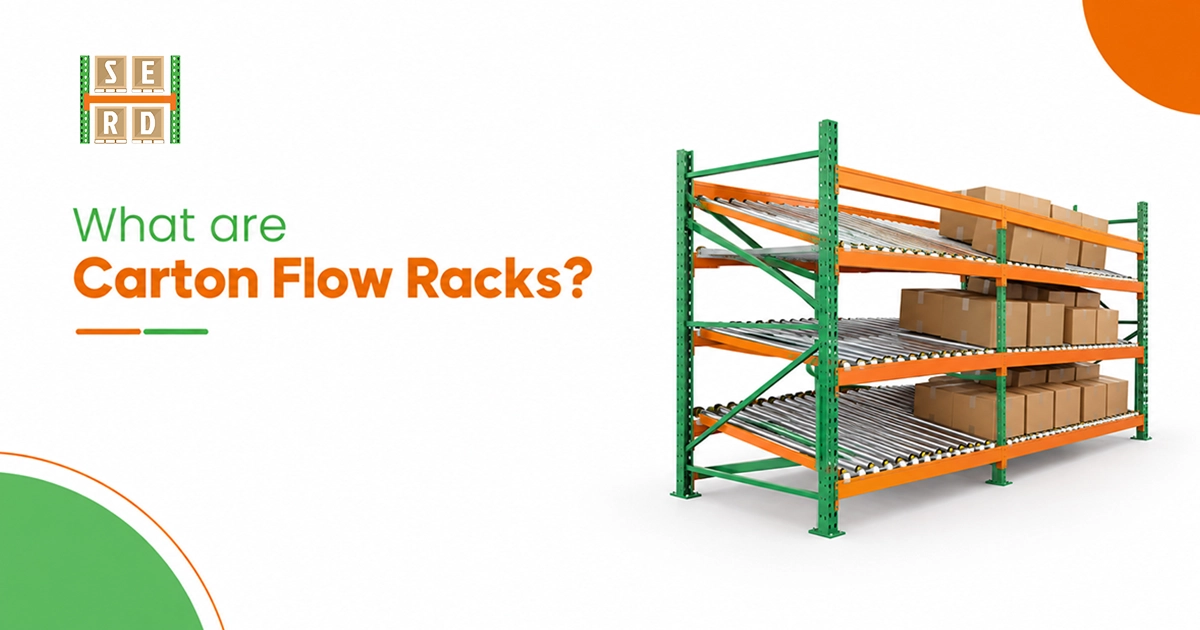
Carton flow rack, also called case flow or gravity flow rack, is a first in, first out storage system built for high volume order picking. It uses slightly inclined shelves fitted with roller or wheel tracks that carry cartons, cases, bins, and totes from the loading side of the rack to the picking side without power.
Most carton flow systems are installed inside standard pallet rack bays, or in standalone bays and pick modules, so they can often be added to an existing warehouse racking system.
How Carton Flow Racks Work
The mechanics are simple:
- Load from the back. A replenishment worker places full cartons at the high end of a lane from the rear aisle.
- Gravity moves the stock. Cartons roll toward the pick face on the inclined track.
- Pick from the front. A picker removes the front carton, and the next one rolls into place.
- Stock rotates automatically. The oldest carton is always at the front.
Because loading and picking happen in separate aisles, replenishment and order picking can go on at the same time without workers getting in each other’s way.
Roller Track vs Wheel Bed
Carton flow tracks come in two main styles:
- Roller track uses dedicated roller lanes and suits cartons, cases, and totes with consistent dimensions and a stable range of products.
- Wheel bed track gives a flexible surface that handles different carton widths and changing product profiles, which suits operations that reslot often.
Choosing between them depends on your carton sizes, weights, and how often your product mix changes.
What Are Pallet Flow Racks?
Pallet flow racks apply the same gravity principle to full pallets. Pallets are loaded by forklift at the rear aisle and ride down the incline on heavy duty rollers or wheels toward the front aisle, where they are removed by forklift. Speed controllers keep the pallets moving at a safe pace, and stops hold the front pallet at the pick face.
Pallet flow is a dense storage system that rotates entire pallets. It is a good fit for high volume, low variety inventory that must leave in the order it arrived. If you want a deeper look, see our overview of heavy duty pallet racks.
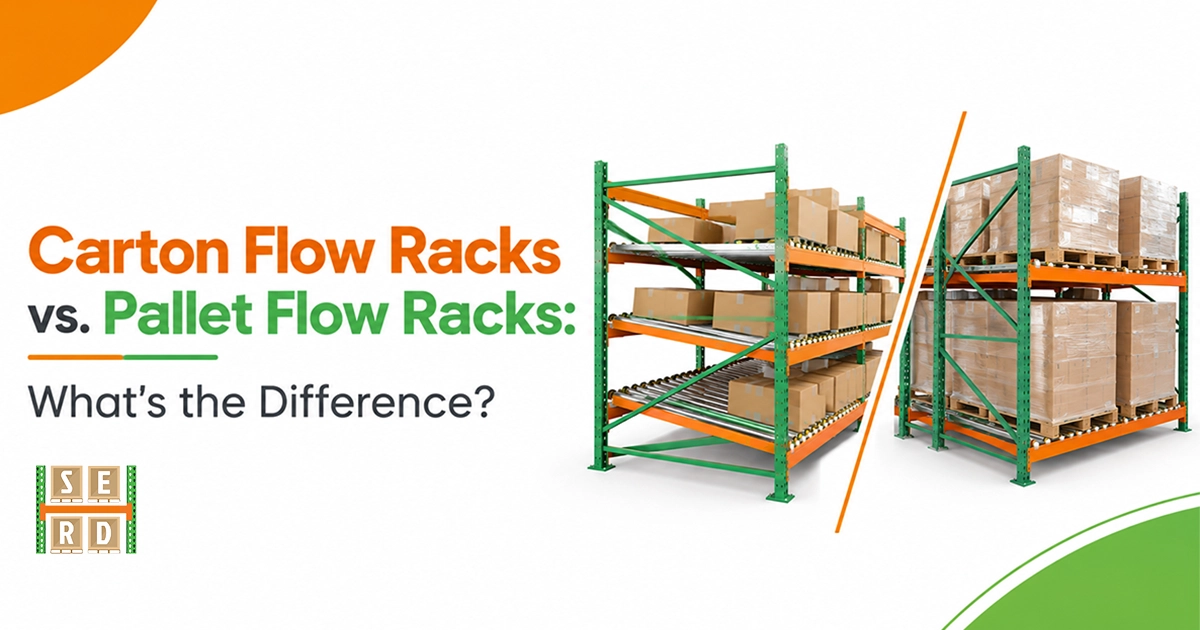
Carton Flow vs Pallet Flow: The Key Differences
| Features | Carton Flow Racks | Pallet Flow Racks |
|---|---|---|
| What Moves | Cartons, cases, bins, totes | Full pallets |
| Who Loads It | Hand loaded by warehouse staff | Forklift loaded |
| Who Picks From It | Order pickers by hand | Forklift operators |
| Track | Light to standard rollers or wheel beds | Heavy-duty rollers or wheels with speed controllers |
| Typical Use | Split case and case picking, order fulfillment | Bulk storage of palletized goods |
| Where It Goes | Inside pallet rack bays or pick modules | Dedicated pallet rack lanes |
| Variety of Products | Many SKUs at one pick face | Fewer SKUs, one product per lane |
| Stock Rotation | First In, First Out (FIFO) | First In, First Out (FIFO) |
The simplest way to remember it: carton flow is a picking system, and pallet flow is a storage system.
Advantages of Carton Flow Racks
- Faster picking. Pickers stay in one aisle and the stock comes to them, which cuts walking and searching.
- Automatic first in, first out rotation. The oldest carton is always the next one picked.
- Simultaneous loading and picking. Separate aisles keep replenishment from interrupting orders.
- Better visibility. Lanes show at a glance which products are low.
- Compact pick faces. Each lane stores several cartons deep in the footprint of a single pallet rack position.
- Retrofit friendly. Tracks can be installed in existing pallet rack.
Limitations to Weigh
- Each lane is dedicated to a product, so very large or constantly changing assortments need planning.
- Cartons must flow. Soft bags, damaged boxes, or uneven bottoms can jam the lane.
- It depends on replenishment discipline. An empty lane stops picking, so someone has to keep lanes loaded.
- It costs more than static shelving, since you are paying for tracks, dividers, and design.
- Extreme size variation is hard on fixed lanes, though wheel bed systems cope better than fixed roller lanes.
Advantages and Limitations of Pallet Flow Racks
Pallet flow gives high storage density and automatic rotation for full pallets, with separate loading and picking aisles for forklifts. The tradeoffs are a higher upfront cost, a need for good quality pallets, one product per lane, and more maintenance because of moving parts. It is most worthwhile for perishable or date sensitive goods moving in volume.
Which One Should You Choose?
Ask three questions:
- What unit are you picking? If orders are filled from cartons, cases, or totes, you want carton flow. If you move full pallets, you want pallet flow.
- How many products do you pick from? Carton flow shines when many SKUs need to sit at one accessible pick face. Pallet flow suits fewer products in larger volumes.
- Who does the handling? Carton flow is hand loaded and hand picked. Pallet flow needs forklifts at both ends.
Many facilities use both. A common layout puts carton flow at the pick face and keeps pallet racks behind it or above it for replenishment stock. Others use pallet flow for bulk inventory and carton flow for the fast moving items picked every day.
Planning Checklist
- List your SKUs and how often each one is picked.
- Measure carton sizes, weights, and bottom surfaces.
- Decide whether you need roller track or wheel bed.
- Define lane depth based on how many cartons you hold per SKU.
- Plan separate loading and picking aisles.
- Assign someone to own replenishment.
- Check fire code and sprinkler requirements for the flow rack area.
- Get a layout review before you buy.
Planning and Installation Help
A flow system depends on layout, slope, and track choice, so it is worth having an expert review your space before you buy. Southeast Rack Depot’s warehouse design consultation can help you match the right system to your product and your picking process, and our warehouse layout design guide is a good place to start.
As a pallet rack installer, Southeast Rack Depot also handles installation and relocation, so the system you plan is the system that gets built correctly. You can browse our pallet racks and warehouse storage products, or read more about pallet racking types, load capacity, and dimensions.
Frequently Asked Questions
What are carton flow racks used for?
Carton flow racks are used for high volume order picking, where cartons, cases, or totes need to be stored and picked in first in, first out order. They are common in retail, e-commerce, pharmaceutical, food and beverage, and parts distribution.
What is the difference between carton flow and pallet flow racks?
Carton flow racks move individual cartons and totes on light rollers or wheels and are loaded and picked by hand. Pallet flow racks move full pallets on heavy duty rollers and are loaded and unloaded by forklift. Carton flow is a picking system, and pallet flow is a storage system.
Can carton flow be installed in existing pallet racks?
Often, yes. Carton flow tracks are commonly installed inside standard pallet rack bays, so many warehouses can convert existing racking into pick locations. A design review confirms the beam spacing and load capacity.
What is the difference between roller track and wheel bed carton flow?
Roller track is usually chosen for cartons and totes with consistent dimensions, while wheel bed track suits varied sizes and frequent product changes. The right choice depends on your carton sizes, weights, and how often your assortment changes.
Does carton flow use first in, first out or last in, first out?
Carton flow uses first in, first out. Cartons are loaded at the back and picked from the front, so the oldest stock is always picked first.
Can I use carton flow and pallet flow together?
Yes. Many warehouses use carton flow for fast moving picks and pallet racking or pallet flow for bulk replenishment stock. The right mix depends on how your products move.
Final Thoughts
Carton flow racks and pallet flow racks share a principle but serve different jobs. Carton flow brings cartons to the picker and speeds up order fulfillment. Pallet flow moves whole pallets and saves space for high volume storage. Knowing what you pick, how many products you handle, and who does the handling usually makes the choice clear.
If you are weighing flow racking against other options for your warehouse, the team at Southeast Rack Depot can look at your layout and products and help you plan. Call us at (770) 630-2309 or get a quote. You can also visit us at 215 N. Easterling St Ste 9, Dalton, GA 30721.